Braeside Lumberboy Bean Stitch Outline Review
First Impressions: Bold, Rugged, and Ready for Impact
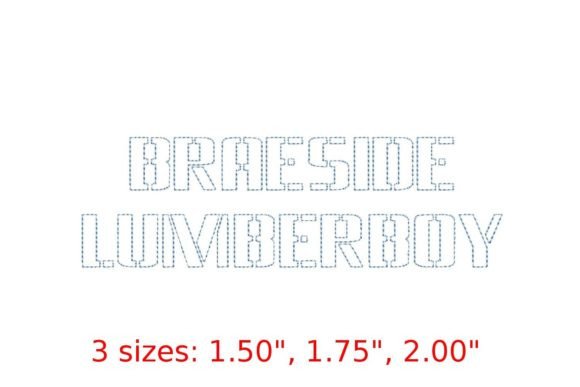
As an embroidery designer preparing for a weekend craft fair, the Braeside Lumberboy Bean Stitch Outline immediately catches the eye. This isn’t a soft or delicate font — it’s bold, structured, and built to command attention. The square-shaped stencil style gives it a rugged, industrial feel that’s perfect for customers who want to make a strong visual statement. If you're targeting a market that appreciates toughness, authority, and modern masculinity, this design checks all the boxes.
How It Performs on Craft Fair Products
When evaluating embroidery designs for a craft fair booth, I always consider how well a design translates across a variety of products. The Braeside Lumberboy Bean Stitch Outline shines brightest on items like tote bags, aprons, and embroidered patches. Its clean lines and structured form make it ideal for large focal points, especially on neutral-colored fabrics where the contrast really pops.
- Tote bags – Works well as a centered chest or back design, especially for back-to-school shoppers or rugged lifestyle brands.
- Aprons – Perfect for a bold name or slogan, particularly in kitchens or workshops where a utilitarian vibe is welcome.
- Tea towels – Great for farmhouse or rustic-themed kitchens, though be mindful of fabric texture affecting stitch clarity.
- Caps and curved surfaces – The angular lines may require slight adjustments for optimal stitch placement on rounded areas.
- Pillow covers – Ideal for bold monogramming or short motivational phrases in modern, minimalist spaces.
Practical Selling & Production Considerations
This design is easy to understand at a glance, which is crucial for fast-paced craft fair environments. Its square, stencil-based structure makes it recognizable even from a distance, helping it stand out in a crowded booth. While it works beautifully as a large focal point, it can feel a bit too busy when scaled down for small accents like keychains or patch pockets.
For Etsy sellers and digital crafters, this design photographs well, especially with high-contrast thread colors. It also lends itself to consistent branding across multiple products — a huge plus for small shop owners looking to build a cohesive product line.
Batch production is feasible, but be cautious of dense stitch areas. If the bean stitch outline is tightly packed, it may require a heavier stabilizer or slower machine speed to maintain quality across multiple items.
Where to Use With Care
There are a few production notes to keep in mind before diving into mass embroidery:
- Dense stitch areas – Watch for thread buildup that could cause puckering, especially on thinner fabrics.
- Small lettering – The stencil style may reduce legibility at smaller sizes; test on scrap fabric before committing.
- Textured towels or thick denim – These materials may obscure fine details, so consider using a smoother cotton or linen alternative.
- Dark fabric – The design’s boldness works well on dark backgrounds, but ensure thread color contrast is sharp enough to stand out.
- Curved surfaces – Caps and curved pouches may need hoop adjustments or stitch path optimization to preserve the design’s clarity.
Visual Appeal and Customer Engagement
The Braeside Lumberboy Bean Stitch Outline has a strong visual presence that draws attention without being overly decorative. It strikes a balance between modern and rugged, making it appealing to a broad audience — from college students looking for back-to-school gear to tradespeople wanting a personalized work bag.
On a craft fair table, this design helps elevate the perceived value of your handmade product. Its structured look signals quality and intentionality, which shoppers associate with premium, well-made goods. When paired with the right product — like a canvas tote or a denim apron — it adds a sense of strength and durability to your brand image.
Designer Notes: Before You Stitch and Sell
Before launching this design into your product lineup, here are some essential steps to take:
- Test on scrap fabric – Always run a sample to check stitch density and clarity.
- Check thread contrast – Ensure the chosen thread color complements the base fabric for maximum visibility.
- Review spacing and alignment – Especially important for stencil designs where gaps can close up under tight stitching.
- Confirm hoop size – Make sure the design fits within your machine’s capabilities to avoid resizing issues.
- Inspect stitch density – Adjust if needed to prevent stiffness or distortion on soft fabrics.
- Use the right stabilizer – A medium-weight tear-away or cut-away will support the bean stitch without leaving residue.
- Create at least one real mockup – See how the design looks in person before listing it online or selling at your booth.
- Compare fabric colors – Try it on light and dark backgrounds to see how the design adapts.
- Confirm commercial licensing – If you’re selling finished products, ensure the machine embroidery design allows for commercial use.
Final Thoughts: A Rugged Design for Rugged Markets
If you're curating a booth with bold, statement-driven handmade items, the Braeside Lumberboy Bean Stitch Outline is a smart addition. It’s not a delicate or intricate design — it’s meant to be seen, noticed, and remembered. Whether you're creating craft fair products, small shop items, or digital design assets, this font brings a strong visual voice to your lineup.
Just remember to test, adjust, and optimize before launching into full-scale production. With a bit of attention to detail, this design can become a standout piece in your collection of handmade products and commercial embroidery offerings.