Begonia Embroidery Font: A Designer’s Honest Review for Real-World Projects
When I first opened the Begonia Embroidery Font file, I was immediately drawn to its soft, flowing lines and delicate balance between elegance and readability. As someone who regularly works with embroidery for custom apparel, personalized gifts, and small shop products, I know how crucial it is to have a font that performs well across different fabrics and project types. Begonia strikes that balance with a slightly whimsical flair, making it ideal for boutique-style branding, nursery decor, or soft-themed holiday gifts.
First Impressions: A Font with Personality
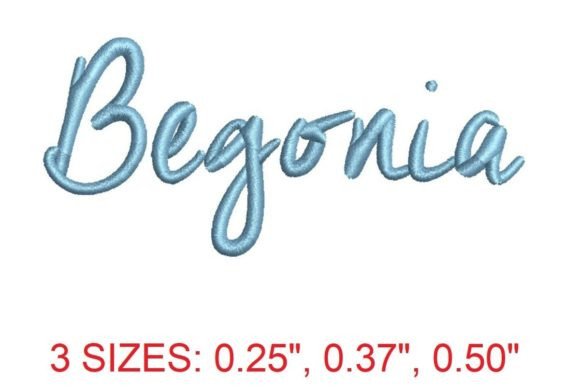
Begonia doesn’t scream for attention—it invites it. The font has a slightly feminine, botanical-inspired shape, with gentle curves and subtle flourishes that give it a custom, hand-drawn feel. It’s not overly ornate like some script fonts can be, which makes it more versatile for different embroidery applications. The spacing between letters feels intentional and balanced, which is a big plus when stitching names or short phrases on items like baby onesies, tote bags, or embroidered patches.
I could immediately see this font working well for a boutique nursery line or a line of personalized tea towels and kitchen linens. It gives off a warm, handmade vibe without looking too busy or difficult to stitch.
Real-World Use: How Begonia Holds Up in Embroidery
I tested Begonia on a few different materials to get a sense of how it would perform in actual use. Starting with a standard cotton tote bag, the font stitched cleanly with minimal thread breaks and no distortion in the lettering. The satin stitches held their shape well, and the fill stitches were dense enough to look solid without being too heavy on the fabric.
Next, I tried it on a lightweight sweatshirt—perfect for a back-to-school personalized gift. The font scaled well and maintained clarity even at a slightly larger size. I was concerned the flourishes might get lost or look too delicate on thicker fabric, but they held up nicely, especially when paired with a contrasting thread color.
I also tested Begonia on a stretchy cotton-blend baby onesie. This is where a font can either shine or fail, depending on how it handles tension and fabric movement. With a light stabilizer underneath and proper hooping, the font stitched out beautifully. The letterforms didn’t pucker or distort, which is a big win for anyone creating baby embroidery items.
This font is a strong contender for:
- Personalized baby items (onesies, burp cloths, bibs)
- Custom tote bags and kitchen linens
- Embroidered patches with soft themes (flowers, nature, nursery)
- Sweatshirts and hoodies with a boutique or handmade aesthetic
- Holiday-themed gifts like embroidered pillow covers or tea towels
- Etsy listings where a clean, elegant font elevates product photos
It also has potential for small business merchandise, especially if your brand leans into a soft, approachable style. Think boutique apparel tags, embroidered tags on handmade soaps, or custom packaging for small-batch products.
While Begonia performs well in most scenarios, it does have a few limitations worth noting:
- Small hoop sizes: The font’s flourishes can get lost or distorted if scaled too small. It’s best used for medium to large lettering.
- Textured or stretchy fabrics: Always test on scrap fabric first and use appropriate stabilizer.
- Dark fabric backgrounds: The delicate details may not stand out as clearly unless you choose a high-contrast thread.
- Curved surfaces (like caps): The font’s flowing style may not track well on curved embroidery fields without proper digitizing adjustments.
- Dense stitch areas: While Begonia isn’t overly dense, be cautious when layering with other designs or appliqués.
Design Notes for Embroidery Professionals and Sellers
If you’re planning to use Begonia Embroidery Font in your craft business or Etsy shop, here are a few practical tips based on my testing:
- Test on scrap fabric first: , especially if you're using a textured or stretchy material.
- Check thread color contrast: —this font benefits from strong color choices to highlight its curves and flourishes.
- Review stitch density: before stitching on delicate or thin fabrics to avoid puckering.
- Confirm hoop size: compatibility—don’t assume it will fit your standard hoop without checking.
- Inspect small details: like flourishes and thin strokes to ensure they stitch cleanly.
- Test in black and white mockups: to see how the font reads without color influence.
- Compare light and dark backgrounds: to determine how the font performs visually.
- Use proper stabilizer: —especially important for stretchy or thin fabrics.
- Check licensing: before selling finished items or digital embroidery files that include Begonia.
How Begonia Impacts Product Appeal and Customer Trust
From a design perspective, Begonia adds a touch of sophistication without being too formal. This makes it a great choice for products that need to feel personal and polished—think personalized gifts, boutique items, or small shop merchandise. Customers often equate clean, well-executed embroidery with quality, and Begonia helps deliver that impression.
When used thoughtfully, this font can elevate your finished product’s presentation, especially in photos for Etsy listings or digital mockups. It also contributes to brand consistency if you’re using it across different product lines—from baby items to holiday-themed goods.
Final Thoughts: Is Begonia Worth the Investment?
Yes, but with a few caveats. If you're looking for a font that can handle a variety of projects—from tote bags to sweatshirts—with a soft, elegant touch, Begonia is a solid choice. It’s especially well-suited for designers and sellers who focus on personalized items, boutique-style apparel, or seasonal gifts.
However, if your work leans heavily into small-scale embroidery or you’re stitching on tricky fabrics like stretch knits or ultra-thin materials, you’ll want to test Begonia carefully before committing to a final project.
Overall, Begonia Embroidery Font offers a blend of style and practicality that many embroidery designers and small business owners will appreciate—especially those who value a handmade look with clean execution.